We talk a lot about inclusion.
Usually it sounds something like:
“Children with SEND should be supported in mainstream wherever possible.”
And yes.
Absolutely.
Children should not have to leave their community simply because ordinary environments were never designed with them in mind.
But I think we need to be very careful about what we mean by included.
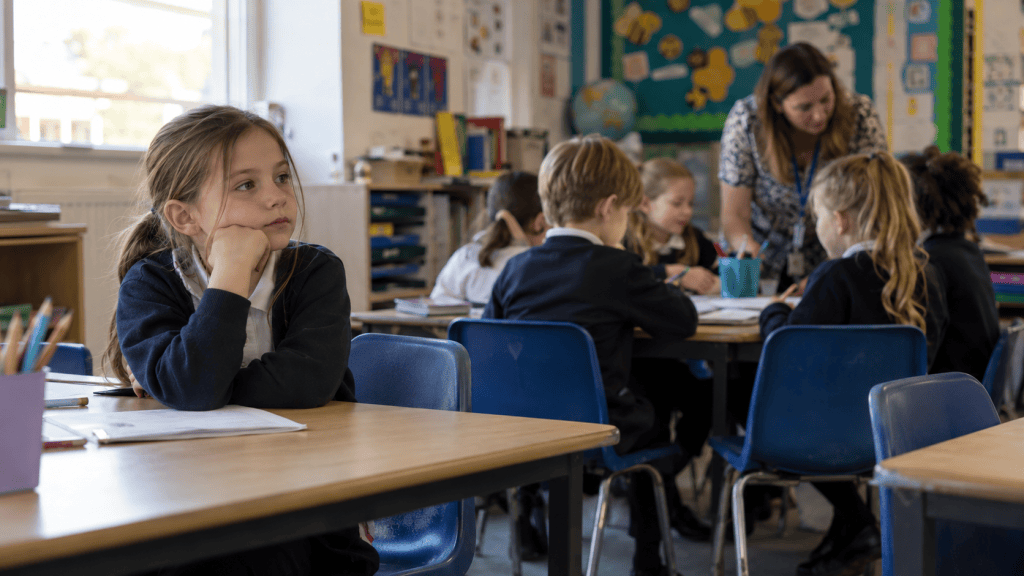
Because a child can be sitting in the same classroom as everybody else and still be completely excluded from what is happening around them.
They can be physically present.
They can be quiet.
They can be compliant.
They can be attending every day.
And they can still be spending the entire day trying to survive it.
Being there is not the same as being included
A child can sit through assembly with their hands over their ears.
They were there.
A child can stay in the classroom while understanding very little because the instructions moved too quickly.
They were there.
A child can spend lunch in a hall that overwhelms them so much they barely eat.
They were there.
A child can attend PE while holding themselves together through every sensory demand.
They were there.
A child can remain in class because they are too anxious to ask for the break they need.
They were there.
Attendance tells us where the child was.
It does not necessarily tell us whether they could access what was happening.
That distinction matters.
Inclusion is not sameness
Sometimes I think we accidentally confuse inclusion with everyone doing the same thing.
Same room.
Same task.
Same timetable.
Same expectation.
Same way of participating.
But some children can only genuinely take part once we stop insisting on sameness.
The child who leaves assembly because the noise is too much can still be included in school life.
The child who eats lunch somewhere quieter can still be included.
The child who works at their own desk can still be included.
The child who uses headphones, movement breaks, visual support or additional processing time can still be included.
The child who arrives slightly differently from everybody else can still belong.
In fact, sometimes the adjustment is exactly what makes inclusion possible.
We need to stop measuring inclusion by tolerance
This is the bit I keep coming back to.
Inclusion is not how successfully a child can tolerate an environment that does not work for them.
A child should not have to prove they can withstand:
noise;
crowds;
unpredictability;
sensory overload;
social confusion;
constant transitions;
or demands that repeatedly push them beyond capacity
before we decide they are successfully included.
If participation requires a child to spend the whole day suppressing distress, I am not sure we should automatically call that inclusion.
Sometimes what looks like successful inclusion from the outside is actually endurance.
And children can become very good at endurance.
Especially children who have learned that showing distress creates more attention, more questions or more demands.
Quiet does not always mean comfortable
This is particularly important for children who mask.
A child may sit beautifully.
Follow instructions.
Complete the work.
Avoid disruption.
Say very little.
Never ask for help.
And be described as:
“Absolutely fine.”
Then they get home.
And everything falls apart.
That does not necessarily mean school has done something wrong.
It does mean the school-day picture may not be the whole picture.
Some children use an enormous amount of energy staying regulated in environments that other people barely notice.
The fluorescent lights.
The scraping chairs.
The person sitting too close.
The sudden timetable change.
The smell of lunch.
The teacher using a different phrase.
The expectation to answer immediately.
The worry that they have misunderstood a joke.
The effort involved in appearing okay.
A child may successfully remain in the room while paying a very high price for doing so.
Inclusion has to include access
If a child cannot understand the lesson, they are not fully included in the learning.
If they cannot communicate that they need help, they are not fully included in the support system.
If they cannot tolerate the environment long enough to participate, they are not fully included in the experience.
If they are physically present but permanently anxious about what will happen next, we have more work to do.
This is where adjustments matter.
Not because we are trying to make school easier in some unfair way.
But because an environment is only accessible if the child can actually use it.
We understand this quite easily with physical access.
Nobody would build a ramp, place three steps in front of it and then say:
“Well, technically the ramp is there.”
Accessibility has to work in practice.
The same should be true for sensory, communication, emotional and learning needs.
Mainstream inclusion needs more than goodwill
The Government’s current SEND reform proposals place a strong emphasis on more children receiving earlier support in mainstream settings, including specialist input closer to schools and communities.
That ambition makes sense.
But mainstream inclusion cannot simply mean:
more children with complex needs staying in mainstream classrooms.
It has to mean mainstream schools having what they need to support those children well.
That might mean:
more trained staff;
specialist teachers;
speech and language input;
occupational therapy;
educational psychology;
smaller groups;
adapted environments;
flexibility;
sensory spaces;
or adults with enough time to notice when a child is quietly struggling.
Otherwise we risk calling something inclusion simply because the child has not left.
Sometimes inclusion means doing something different
There can be a strange fear around difference.
As though letting one child do something differently automatically separates them from everyone else.
But children already notice difference.
They notice who finds things hard.
They notice who needs help.
They notice who wears glasses.
Who uses crutches.
Who has a different lunch.
Who leaves class.
Who gets extra time.
Difference is not created by support.
It already exists.
Good inclusion is teaching children that different people need different things in order to participate.
That is a much healthier lesson than pretending fairness means everybody gets exactly the same.
The goal is not to make the child look typical
A successful adjustment may make a child stand out slightly more.
They may use headphones.
They may sit somewhere different.
They may leave early.
They may have a visual timetable.
They may need an adult beside them.
They may not attend every part of an activity in exactly the same way.
And that can still be successful inclusion.
Because the goal is not:
Can we make this child look like everybody else?
The goal is:
Can this child access, participate and belong?
Those are not the same thing.
Belonging matters too
You can technically access education and still feel like you do not belong.
That part is harder to measure.
Does the child feel safe?
Do they feel understood?
Is there an adult they trust?
Can they make mistakes without becoming terrified?
Can they say they need help?
Can they opt out without feeling punished?
Do they feel like support is something they are allowed to use rather than something that makes them “difficult”?
Do they feel known?
Because inclusion is not just about adapting worksheets or providing a quiet room.
It is also relational.
A child is more likely to participate in an environment where they believe the adults around them are safe.
And sometimes mainstream will not be right
This matters too.
There is a danger that enthusiasm for inclusion can turn into the assumption that mainstream education is always the most inclusive option.
It is not.
For some children, a specialist environment may provide far greater access, participation and belonging than a mainstream placement ever could.
That does not make the child less included.
It may be exactly what genuine inclusion looks like for them.
We should not make “mainstream” the outcome.
The outcome should be the right environment.
One where the child can learn.
One where they can communicate.
One where their needs are understood.
One where they are not spending every day in survival mode.
Maybe we need a better question
Instead of asking:
“Can this child stay in mainstream?”
perhaps we should ask:
“What would this child need in order to genuinely belong here?”
That question changes things.
Because now we are not measuring success by whether the placement remains technically intact.
We are looking at the experience inside it.
Can they access learning?
Can they regulate?
Can they communicate?
Can they participate?
Can they build relationships?
Can they recover from ordinary school days without completely falling apart?
Can they be themselves?
That feels much closer to inclusion.
Being in the room is the starting point
Not the finish line.
A seat in a classroom is not automatically inclusion.
Attendance is not automatically participation.
Compliance is not automatically comfort.
Quiet is not automatically coping.
And sameness is not automatically fairness.
Sometimes the most inclusive thing we can do is change the environment.
Change the expectation.
Change the route in.
Change the way a child participates.
Because inclusion should never mean:
How do we make this child keep doing what everybody else is doing?
It should mean:
What needs to change so this child can genuinely belong here?


Leave a Reply